Monday, October 10, 2011

Regency Era Needlework Patterns from Ackermann's Repository 1811-1815

Needlework played a significant role in the Regency period.  The industrial age had not yet started and most textile work was performed by hand, including the creation and ornamentation of clothing and linens for the home.  Those of the affluent classes could afford to pay for these services to be performed for them but those of lesser means or those women wishing to display their skill with needle and thread would stitch in one form or another during their leisure time.

Ackermann's Repository (A Regency monthly publication from 1809-1828) included needlework patterns in a majority of its issues from 1811 - 1828.  They did not appear every month but they were published very frequently,  which goes to show they were a popular regular item for the lady readers of Ackermann's

One pretty pattern from the August 1812 issue of Ackernann's Repository
 These lovely patterns can be used as inspiration in so many modern day crafting projects that I could not resist posting them.  I'm sure their original creators would smile if they knew they were getting a new life nearly 200 years after their creation.

Please take a look at my previous post to see one idea on how to use 
these pattens to create digital scrapbook and crafting backgrounds.

Enjoy!


 42 Authentic Regency Era Needlework Patterns 
dating from 1811 - 1815

November 1811 - Ackermann's Repository Needlework Pattern

December 1811 - Ackermann's Repository Needlework Pattern

January 1812 - Ackermann's Repository Needlework Pattern

February 1812 - Ackermann's Repository Needlework Pattern

March 1812 - Ackermann's Repository Needlework Pattern

May 1812 - Ackermann's Repository Needlework Pattern

June 1812 - Ackermann's Repository Needlework Pattern

July 1812 - Ackermann's Repository Needlework Pattern

August 1812 - Ackermann's Repository Needlework Pattern

September 1812 - Ackermann's Repository Needlework Pattern

October 1812 - Ackermann's Repository Needlework Pattern

November 1812 - Ackermann's Repository Needlework Pattern

December 1812 - Ackermann's Repository Needlework Pattern

January 1813 - Ackermann's Repository Needlework Pattern

February 1813 - Ackermann's Repository Needlework Pattern

March 1813 - Ackermann's Repository Needlework Pattern

April 1813 - Ackermann's Repository Needlework Pattern

May 1813 - Ackermann's Repository Needlework Pattern

June 1813 - Ackermann's Repository Needlework Pattern

August 1813 - Ackermann's Repository Needlework Pattern

October 1813 - Ackermann's Repository Needlework Pattern

November 1813 - Ackermann's Repository Needlework Pattern

December 1813 - Ackermann's Repository Needlework Pattern

January 1814 - Ackermann's Repository Needlework Pattern

February 1814 - Ackermann's Repository Needlework Pattern

March 1814 - Ackermann's Repository Needlework Pattern

April 1814 - Ackermann's Repository Needlework Pattern

May 1814 - Ackermann's Repository Needlework Pattern

August 1814 - Ackermann's Repository Needlework Pattern

September 1814 - Ackermann's Repository Needlework Pattern

October 1814 - Ackermann's Repository Needlework Pattern

November 1814 - Ackermann's Repository Needlework Pattern

February 1815 - Ackermann's Repository Needlework Pattern

March 1815 - Ackermann's Repository Needlework Pattern

April 1815 - Ackermann's Repository Needlework Pattern

June 1815 - Ackermann's Repository Needlework Pattern

July 1815 - Ackermann's Repository Needlework Pattern

September 1815 - Pattern #1 - Ackermann's Repository Needlework Pattern

September 1815 - Pattern #2 - Ackermann's Repository Needlework Pattern

October 1815 - Ackermann's Repository Needlework Pattern

November 1815 - Ackermann's Repository Needlework Pattern

December 1815 - Ackermann's Repository Needlework Pattern

I can only imagine all the items that Regency ladies embroidered using these patterns
Robes, wraps, dresses, collars, waistcoats, garters, chemises, linens and more.

The interesting thing is that only occasionally was there any written information to accompany these patterns.  I guess for the most part the ladies were thought to be accomplished enough to know how to use them properly or to apply them as they saw fit.

Here are a few that I was able to find for some of the above patterns.

description for the January 1812 pattern
description for the February 1812 pattern


description for June 1812 pattern

I hope you have enjoyed another fascinating glimpse into the real Regency era
found on the pages of Ackermann's Repository.


Please join me next time when I continue the series with
needlework patterns form 1816 - 1820.


Thanks for visiting me here at EKDuncan.blogspot.com

If you have enjoyed seeing these images from Ackermann's Repository 
and would like the opportunity to see and read an original for yourself 
they are are available on line at www.archive.org

Click HERE then choose the volume you are interested in.
You can then see and read them online or download 
them to your computer for future reference.
Enjoy!

Sunday, October 9, 2011

Creating Digital Backgrounds from Ackermann's Repository Patterns

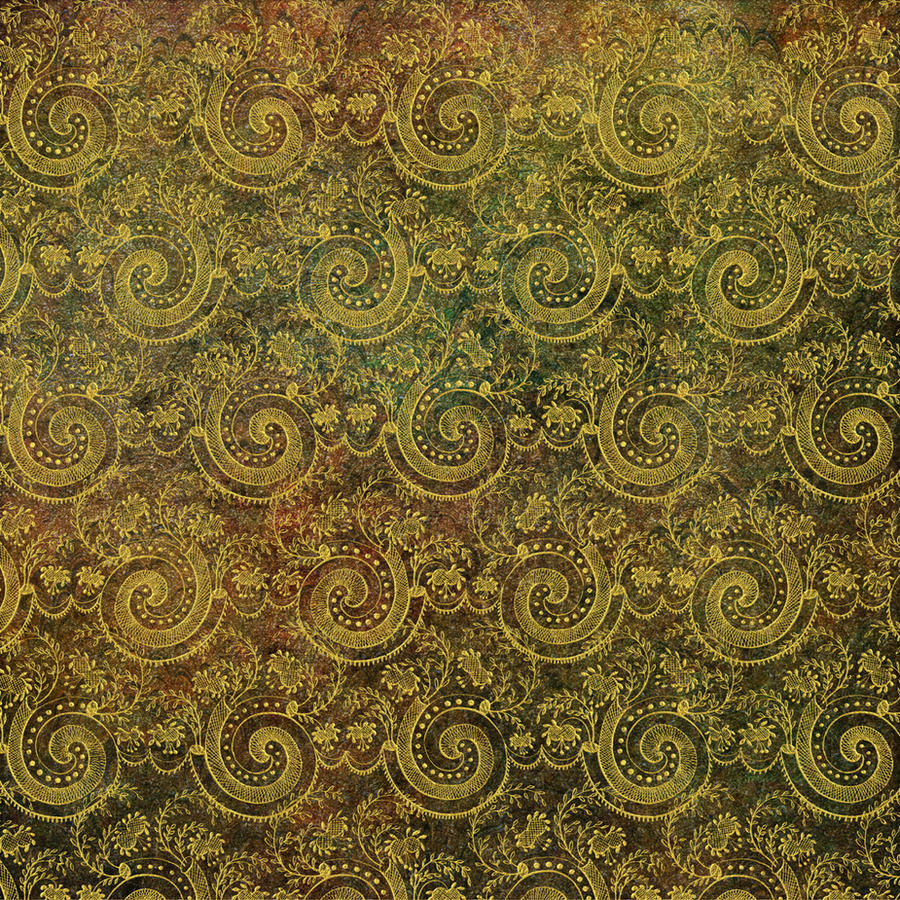
Recently I've been playing around with some of the interesting decorative and needlework patterns I found in Ackermann's Repository ( a 200 year old Regency England era magazine that was published from 1809 - 1828).  Naturally I wanted to find a fun way to use these great patterns in with my digital art projects and I've been thrilled with the results so far.

Digital Background I created using an 1816 Ackermann's Repository needlework pattern

I'm not much of a needle worker myself; however I found these antique patterns intriguing and wanted to see what creative purpose I could put them too... so I decided to turn them into digital patterns that I can turn into lovely background for use as digital scrapbook pages, textures or embellishments in my digital art creations.   I enjoy creating fun backgrounds and textures in Photoshop and now have
a lot of great new patterns to play with thanks to Ackermann's Repository.


Here is how I created the above finished background

Needlework pattern from Ackermann's Repository Sept 1816 issue
I started with the original pattern from Ackermann's and cropped out 
the swirled section on the bottom using Photoshop.


I digitally removed the background in Photo shop till I was left with the basic pattern.
Next I erased of all the background areas so I was left with a transparent png image.
This transparency is what allows the pattern appear as real embroidery would  
with just the "stitches" visible above the fabric.


I digitally cleaned up the pattern a bit and added a gold "style" in Photoshop.
I cleaned up the right side of the pattern so I would have a good "repeat" when I started 
plotting my pattern out and used a gold "style" in Photoshop to act as my "thread" color.


I added and reversed swirls in Photoshop till I had this final pattern
This is my completed transparent png pattern.  
I can now easily change the "stitching" color for the whole piece at will and can add 
any number of background choices to create a new look whenever I choose.


I added a great multi-colored background, played with styles and blending modes then added the swirl layer on top.
For my first example I used a fun multi-colored background I created, set with a blending mode of "Multiply" so the base under layer would be seen through it. The base layer is not actually a solid color, it has a "style" applied to it and it is a combination of this style and the middle layer with the multi-colored background set to blending mode "multiply" that is creating this great fabric effect.

I think the finished piece has the look of a baroque or damask gold embroidered material.


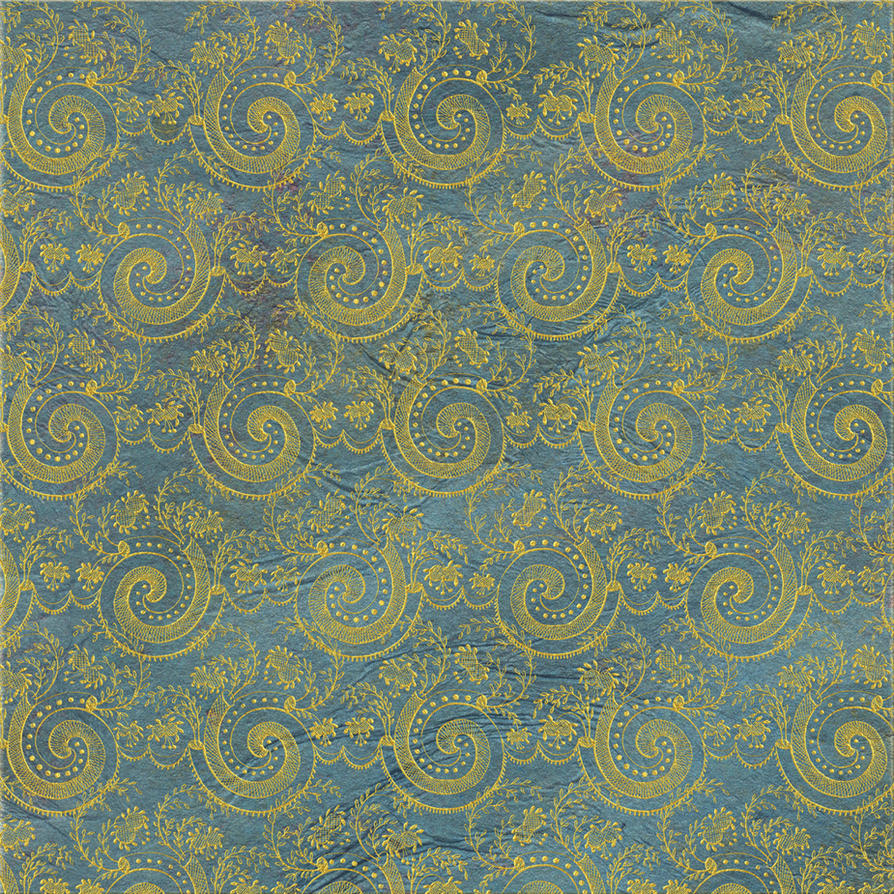
Here are two more examples of backgrounds using this same swirl pattern.

Glitter Green Background with bright gold swirls
 I thought this would make a great Christmas pattern.


An antique blue with a soft gold swirl
 Here the background pattern has a bit of a wrinkled fabric look to it.


****************


Another example using a wood craft pattern.

Ackermann's Repository July 1819 Decorative Pattern
I used the upper portion of the this decorative pattern that was intended for 
wood-working projects such as carving or inlay work. 

The pattern was incomplete on the right side so I had to make some alterations in
Photoshop to create the full image.


Half - Pattern
I cropped the pattern in half in Photoshop so I could then create a mirror image 
of this half and then have a full pattern once the process was complete.


Full - Pattern
In Photoshop I created a duplicate of the above "half-pattern", flipped it to get a 
mirror image and lined it up so I had a perfectly symmetrical full-pattern.


Digitally Decorative version of the full-pattern
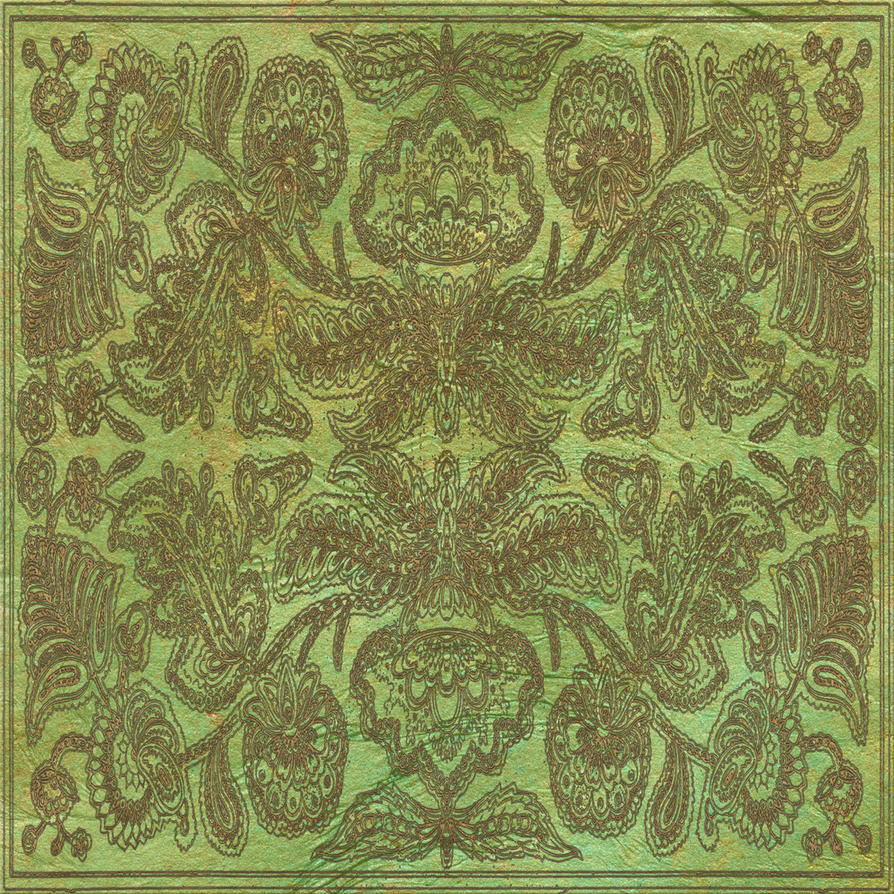
By removing the beige & black backgrounds I had my "stitch" lines and could treat this like the first needlework pattern.  I have a thing about creating digital backgrounds that can be used as scrapbooking papers so I played with this basic design a bit so I could have a 8x8 version of it too.


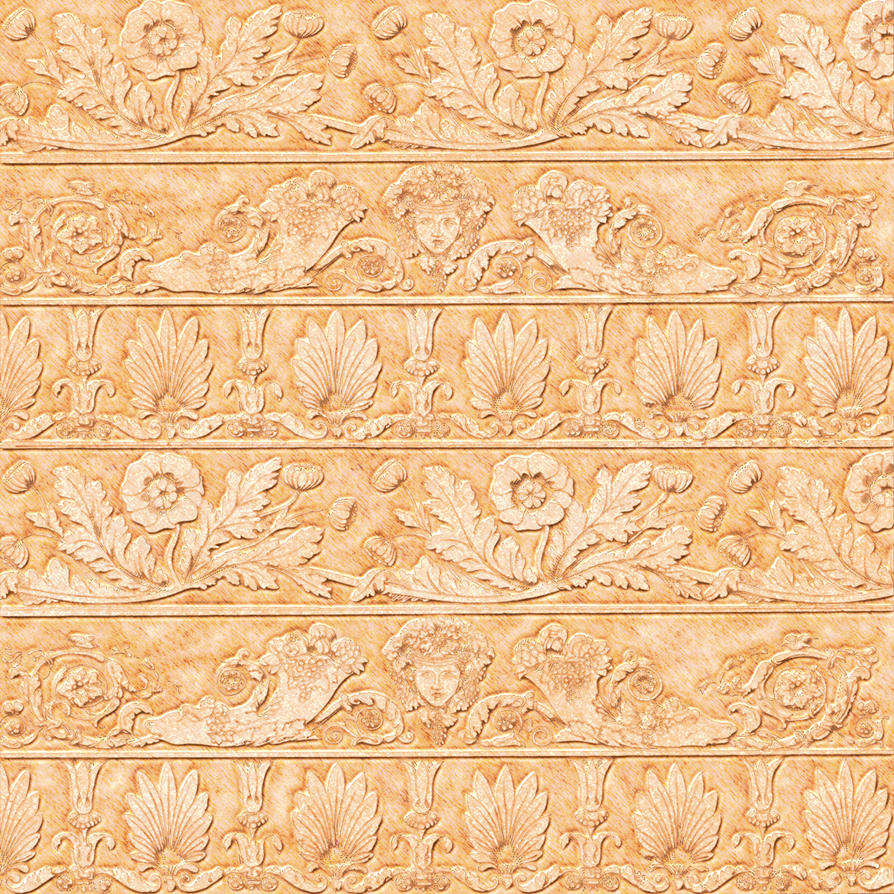
Ackermann's Altered 1819 Pattern - Red

Ackermann's Altered 1819 - Gold

Ackermann's Altered 1819 - Green
These are just three examples of digital scrapbook pages I was able to create using that one pattern.  Each was quickly arrived at by changing backgrounds and playing with blending modes and styles in Photoshop.


***************************

One Last Pattern Example

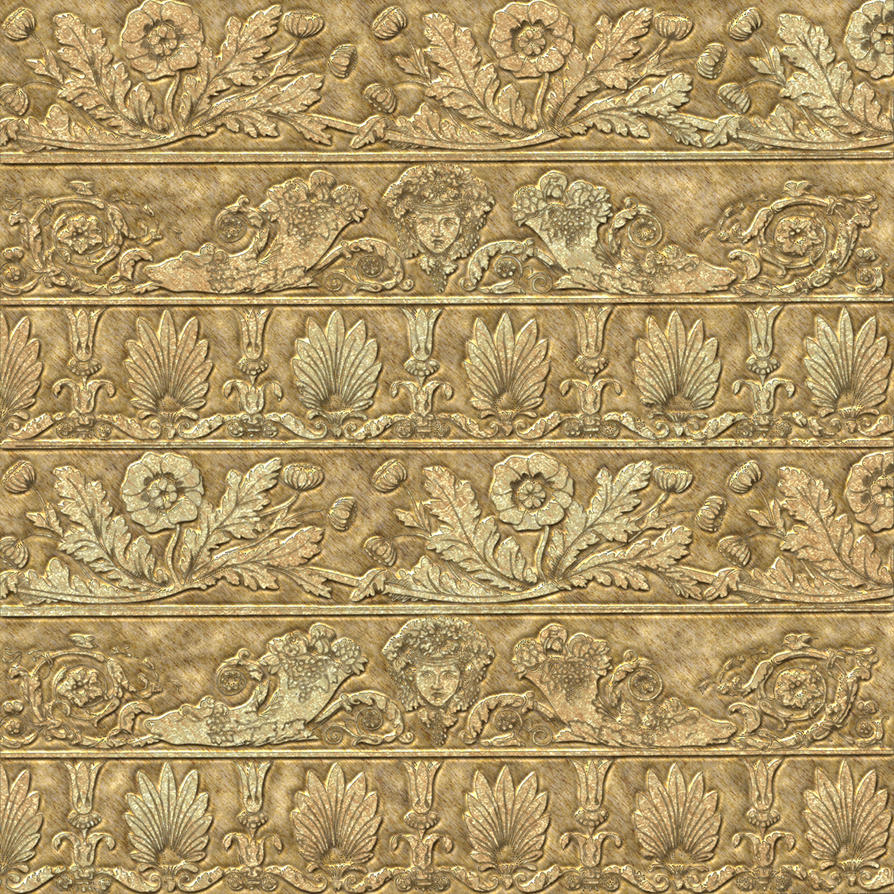
Ackermann's Repository February 1817 Painting Pattern
This pattern was intended to use as a decorative painting pattern and could have been used 
as a whole or as the separate patterns.  I chose to use it as a whole in my example.

In two of my examples I kept the black background and in the other two I removed the black background.  
I think I actually like this pattern better with the black background in place. 
See what you think. 

(The beige background was made transparent for all the backgrounds shown below 
and the black background was made transparent for the very last two examples.)

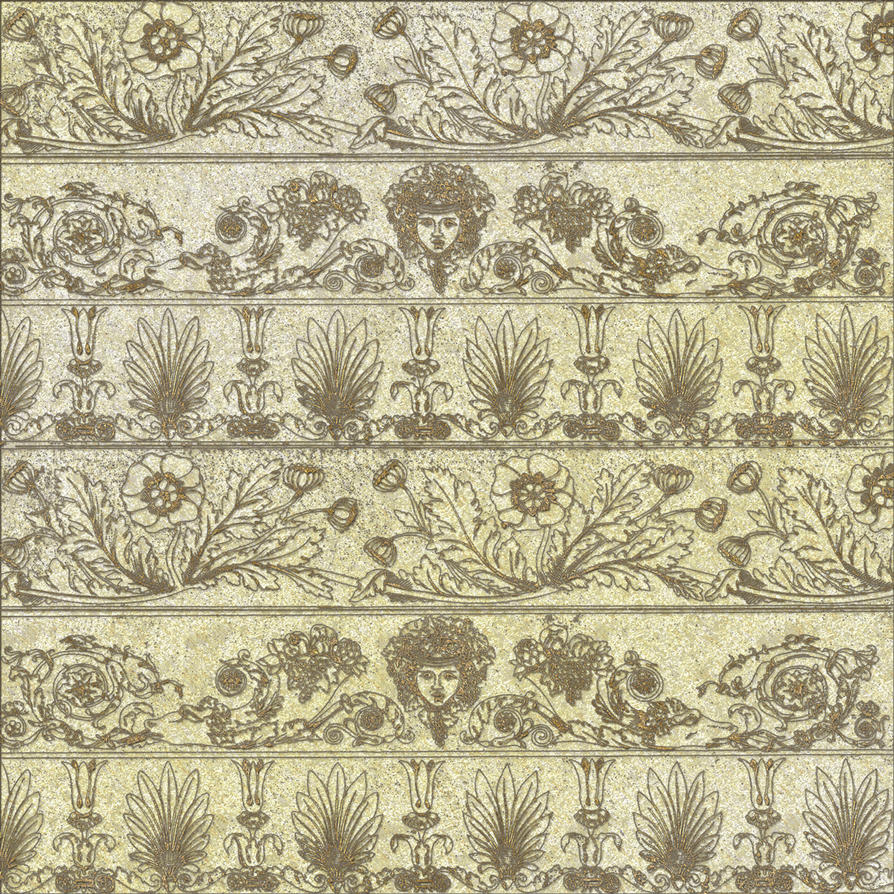
 Ackermann's Repository Altered 1817 pattern - version 1

This is the first example showing the pattern with the black background still as part of the design.
I used similar styles in Photoshop for the under layer that shows through the transparent portions as what I placed over the whole design area.  This is my favorite of the 4 - I think it has the look of carved stone or embossed antique metal.


Ackermann's Repository Altered 1817 pattern - version 2
Version 2 is very similar to the one above but in a much lighter color
and has more of an embossed leather look to it.


Ackermann's
Here in version 3 the original black background was made transparent 
so that only the outline portion of the pattern was used.

This causes the chosen "style" used in Photoshop to be placed only on the outline areas rather than also on the surrounding areas that were originally black.  This creates more of the "stitching" feel or a look that is similar to heat embossing when you rubber stamp and use an embossing powder.

Ackermann's Repository Altered 1817 pattern - version 4
In the final version I've was going for that verdigris look of the greenish copper with antique copper embossing.  Once again in this version the original black background was made transparent so that only the outline portions take on the embossed look.
****************************

There is no doubt that I enjoy working with Photoshop and manipulating patterns to create new from the old.  I'm sure the artists that created the original patterns for Ackermann's never imagined that nearly 200 years later they would still be used by a more modern version of the ladies it was originally created for. Larger Downloadable versions of these and other backgrounds using vintage Ackermann images can be found on my deivantART account at
http://eveyd.deviantart.com/gallery/33488210

 I will be sharing a good portion of original Regency designs and needlework patterns in my next few posts so you can see the vast collection that were produced by Ackermann's Repository and their artists. And I hope you find a use for some of them in your own creations and art projects.


Till next we meet...


Thursday, October 6, 2011

The Masquerade Ball - Regency Era Story from Ackermann's Repository

Ackermann's Repository usually had several short stories in each issue and with it being the month of October I thought this story about a Masquerade Ball would be a fun one to share with all of you who have been following along with my Ackermann's Repository series.

Ackermann's Repository is such a wonderful reference into what the real Regency world was like.  I just love all the little tidbits that can be found in it's pages, so I hope you are enjoying them too.


Regency Masquerade by EKDuncan
  I enjoy creating digital art; so I've created this fun piece using some images from Ackermann's Repository and a fun mask I have in my digital collection to keep in theme of the story I wish to share with you today.


These are the Items I used to create "Regency Masquerade"


 I removed the background from the original fashion plate and created 
a png image I could use as I wished. A mask was added to my lady
in the finished artwork;  so I saved her both ways for a fun bit of variety.

Click HERE to see the original image and the other fashion plates from 1827


1812 Grand Staircase at Carlton House - from Ackermann's Repository
This is one of those huge fold out, hand colored prints that would 
appear on occasion an Ackermann's Repository issue.  

Many of the Regency romances I read talk about the sweeping staircases that the guests 
encounter at balls so I thought this would make a great backdrop for my Masquerade Lady.


The frame used to finish off the piece came from Madam M over at deivantArt.com

*************************************


This short story appeared in the November 1828 issue of Ackermann's Repository.
(Series 3 - Volume XII)


I hope you enjoyed this fun little look into the reading entertainment
of those who lived in the late Regency period.

Please join me again later for some more fun bits and pieces 
from Ackermann's Repository.


Sunday, October 2, 2011

Regency Era Ghost Stories from Ackermann's Repository

October is my favorite month of the year.  I love the slightly warm days and the crisp cool nights, the changing of the leaves and the historical ghost specials that come on TV due to the Halloween season.
  I'm sure you've seen these shows a time or two yourselves - Ghosts of Charleston, Ghosts of England, Ghosts of Scotland and so on and so forth.  There's just something tingly about historical ghost stories that I can't resist; so you can just imagine how thrilled I was to discover ghost stories in the pages of Ackermann's Repository. 

Yes, Ackermann's Repository had more than just pretty fashion plates and needlework patterns.  It also contained a large assortment of literary pieces, including short stories and poems.  
There was even a series of ghost stories and legends spread throughout various issues from 1823 - 1828.  
This goes to show that the Regency era public did enjoy ghost stories and legendary tales as we still do today.  After all this was the time period of the Gothic revival in both architecture and literature.

I wanted to share a few of those stories with you now so you can actually read two real Regency published ghost stories as the public read them nearly 200 years ago.  I think you may be surprised as I was that they were not overly titillating and seemed fairly tame and reservedly factual.  
My guess is they did not want to "scare" the public with these tales, just peek one's curiosity or give them a giggle as you will see with the first story.  (I've place the stories a bit lower down in my post).


My spin on Ghost Ladies of the Regency - just for the grins and giggles of it.
With this being the month of Halloween, I could not resit creating a fun piece of ghostly Regency art using some of the great images from the pages of Ackermann's Repository.  I gave my pretty ladies of the Regency a ghostly appearance by lowering their opacity value in Photoshop so they are now semi-transparent and the room can be seen through them.

 Here are the items I used to create the ghostly scene.

1815 Furniture Plate of a French Bed Chamber from Ackermann's Repository
Ackermann's Repository occasionally produced extra large plates that folded out so you could see the entire piece.  This was one of them as you can tell from the fold line about a third of the way in on the left hand side.  I "brushed" out the line in Photoshop when I used this for my scene but I wanted you to see the actual plate as is was in Ackermann's.


To make the first ghost I converted one of my favorite 1827 fashion plates 
into png format so she could be placed as needed in the scene.

The original fashion plate can be seen HERE with all the other 1827 fashions


The second ghost was created by converting one of my favorite 1828 fashion plates 
into png format so she too could be placed as needed.

The Original fashion plate can be seen HERE with all the other 1828 fashions


The frame used to finish off the piece came from Madam M over at deivantArt.com

 I used the Ice Blue frame - but I altered it's shape and color just a bit to work with my project.


****************************

Now on to the Ghost Stories
from  Ackermann's Repository


Enjoy!


The Widow of Milan
This is a quite whimsical ghost story that I think you might get a giggle or two from.
This story supposedly takes place in the late 1400's and was repeated here in an
Ackermann's Repository 1823 issue for it's entertainment value.


The Apparition of Lady Lee

This story was published in one of Ackermann's Repository 1824 issues and
almost reads as if it should be in a scientific journal.

The original story dates from the 1660's and is claimed to be one of the best authenticated
ghost stories of the day.  The story is given merit as being found in the pages of
Beaumont's "World of Spirits".
(I believe this is meant to refer to a work by John Beaumont in 1705 titled:
An Historical Physiological and Theological Treatise of Spirits, Apparitions, 
Witchcrafts, and Other Magical Practises)


As you can see from the stories above there is nothing to horrifying or scary in them.  After all, Ackermann's Repository would not wish to offend the sensibilities of it's reading audience.

Regency readers with more gruesome requirements could pick up a large variety of spine tingling Gothic novels at the local book sellers some of which would have included authors like Ann Radcliffe, Horace Walpole,  and even Jane Austen's - Northanger Abbey for those more faint of heart.

******************

I hope you have enjoyed this glimpse into some of the literary tales that were
available in the pages of Ackermann's Repository.

Until our next adventure from Ackermann's...